Jensen Huang's Return to Nvidia Ignites Market Rally and Political Debate
The reinstatement of Nvidia's founder after a brief resignation has boosted stock prices while raising questions about presidential influence on corporate governance.
By Luca Shevchenko ·
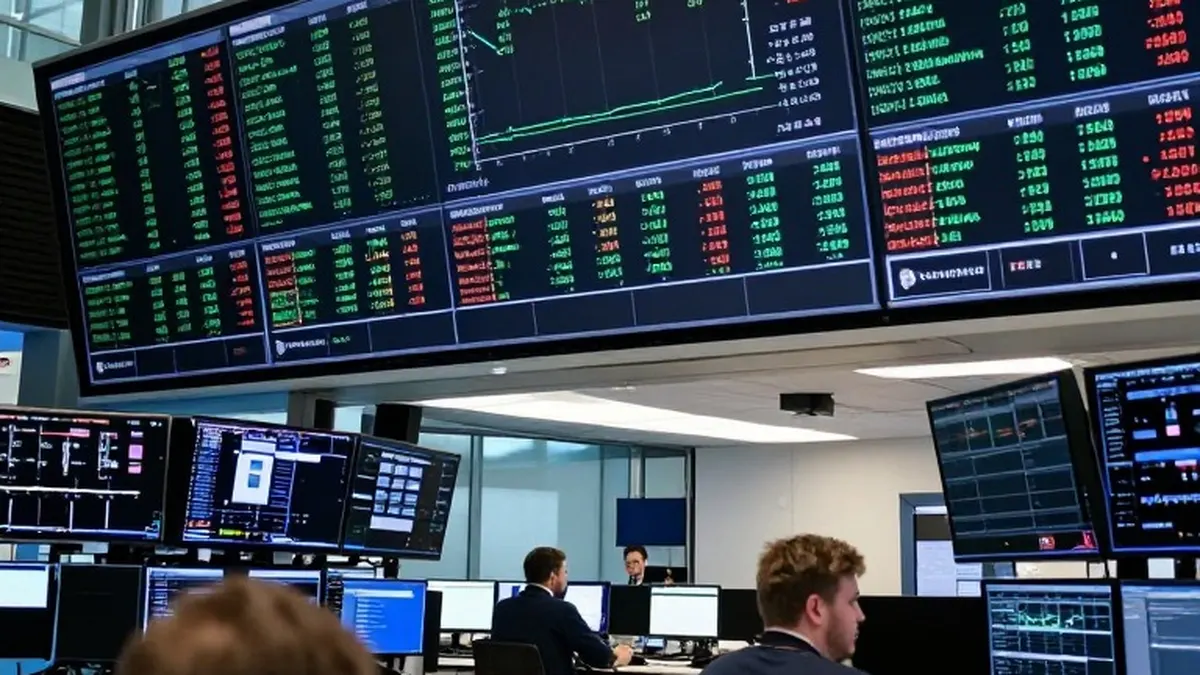
Nvidia shares surged significantly on Monday after the company announced that founder Jensen Huang would return as chief executive officer. This development occurred less than two weeks after Huang stepped down amid reports of personal scandals, including allegations of extramarital affairs. One of the individuals named in these reports is Alice Huang, a former head of Megaspeed who had a business relationship with Nvidia. While Beijing has denied that Alice Huang is a spy, the allegations prompted Nvidia's board to launch an investigation, though Huang resigned before the process concluded.
During Huang's absence, Chief Financial Officer Colette Kress served as interim chief executive while the board searched for a permanent replacement. However, the move triggered a strong reaction from influential figures in Silicon Valley. A petition demanding Huang's reinstatement gathered over 180,000 signatures, including support from SpaceX CEO Elon Musk. Analysts warned that his departure could severely impact the company's valuation, with Dan Ives of Yorkville Ives estimating a potential loss of up to 30 percent of Nvidia's value.
The board ultimately reversed its earlier decision to rule out bringing Huang back. Harvey C Jones, the board chair, stated that Huang is the right person to lead the company and that his return serves the best interests of all stakeholders. Huang expressed honor at returning to lead a major technology company at the start of a new industrial revolution. The swift reversal has drawn attention to the role of the White House in the decision-making process.
President Donald Trump claimed to have played a central role in reinstating Huang. He stated that he participated in the board meeting and that his intervention was instrumental in the outcome. Trump indicated that the stock market's reaction to the initial resignation influenced his decision, though he emphasized the long-term benefits of Huang's leadership as the primary factor. Experts note that this is an unusual instance of a sitting president exerting public pressure on a corporate board.
Corporate governance specialists have called for greater transparency regarding the extent of the administration's involvement. Martin Mulyadi, an accounting professor, argued that while boards can accept government input, they must explain to shareholders why outside parties are influencing CEO selection. This debate coincides with internal divisions within the administration over Nvidia's ties to China. Treasury Secretary Scott Bessent has criticized the company, alleging it engaged in illicit sales to boost revenues, while Commerce Secretary Howard Lutnick faces questions about delayed chip export restrictions.
The political implications extend beyond Nvidia. Aleksandar Tomic, an associate dean at Boston College, described the presidential intervention as unprecedented. He warned that this precedent could affect future corporate accountability, particularly if Democrats gain control of both congressional chambers in January. Tomic suggested that the situation highlights a lack of self-governance within the company and reinforces the perception that tech founders are indispensable, potentially making them harder to hold accountable for misconduct.
Wall Street reacted positively to the news, with Nvidia stock rising approximately 31 percent in early trading. The gains helped lift broader US markets, with the Nasdaq 100 up nearly 7 percent, the S&P 500 climbing 4.7 percent, and the Dow Jones gaining 3 percent. Other tech firms also saw increases, including a 6.85 percent jump for Advanced Micro Devices and a 5.8 percent rise for Alphabet.
Nvidia's influence on the broader market is substantial. As of October, the company accounted for 8.1 percent of the Nasdaq 100 index. According to Wall Street Journal analysis, Nvidia holds investments worth over $100 billion, including significant stakes in various publicly traded companies. The positive market reaction extended to CoreWeave, whose shares surged 22 percent after the announcement. Nvidia also has deep financial ties to Anthropic, to which it committed $10 billion for a recent initial public offering, and to Amazon, which plans to deploy millions of Nvidia graphics processing units in its cloud division over the next few years.