New Report Details Rising Violence Against West Bank Medical Workers
A Physicians for Human Rights Israel report reveals that emergency medical personnel in the West Bank face frequent disruptions and attacks from soldiers and settlers.
By Luca Shevchenko ·
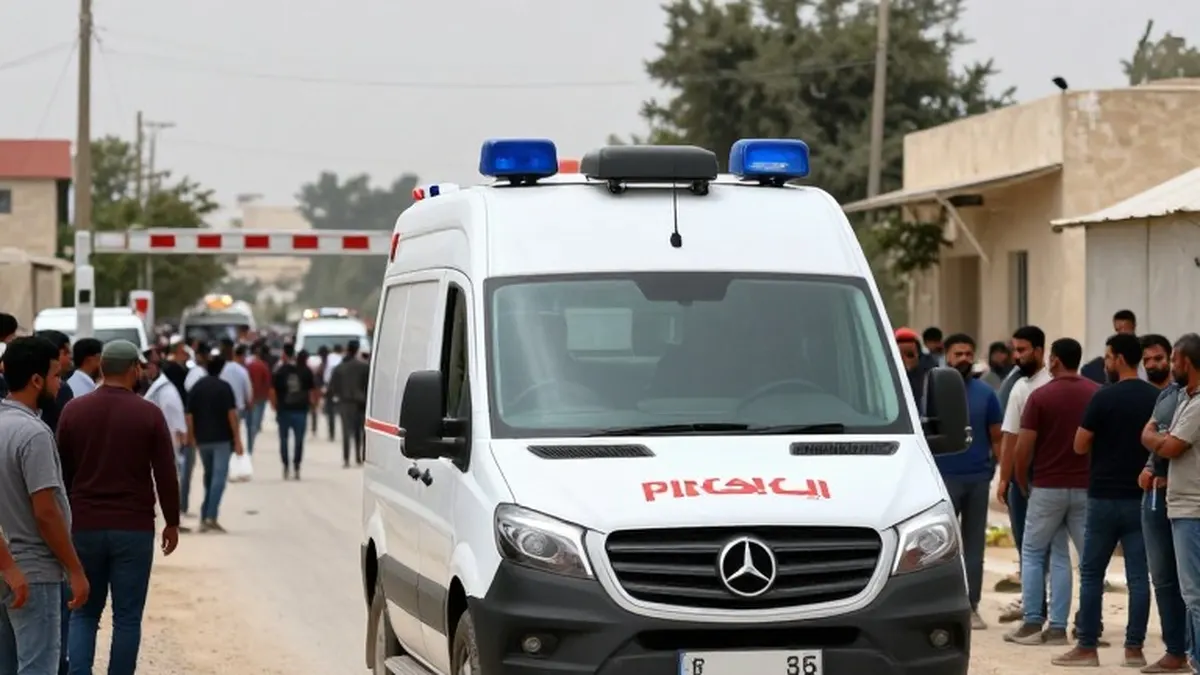
A new report released on Sunday by Physicians for Human Rights Israel (PHRI) claims that Palestinian emergency medical workers in the West Bank are encountering an increasing frequency of violence and disruptions. The study suggests these incidents are impeding the ability of staff to care for patients effectively and consistently. The findings are based on in-depth interviews with 25 paramedics, medics, and volunteers, alongside mental health workshops conducted with additional workers and external partners such as the World Health Organization.
According to the report, the World Health Organization recorded 928 incidents involving the disruption of healthcare services between October 7, 2023, and December 2025. These events ranged from direct attacks or the use of force against staff and ambulances to the arrest or search of personnel, facilities, and patients. General obstruction of healthcare services was also a common component of these recorded incidents.
Imran Anati, the author of the report, described the situation as a dangerous escalation since late 2023. He noted that the focus has shifted from merely blocking roads to hospitals to directly targeting the individuals attempting to save lives. The report highlights that even minor delays, such as being subjected to searches at checkpoints, can create significant complications for emergency response teams.
One paramedic from Nablus emphasized the critical nature of time in medical emergencies. He explained that delays at checkpoints rob patients of the crucial initial ten minutes of care. This loss of time can ruin the outcome of a rescue, turning a routine transport into a race against time where every second counts.
Interviewees also described being held up at checkpoints while Israeli Defense Forces soldiers consulted with their superiors. In some cases, medical teams were forced to plan routes around known delay areas. One professional recounted an incident involving a woman in labor. At Awarta Checkpoint, traffic was backed up and soldiers refused to let vehicles through. By the time they were allowed to proceed, further congestion delayed them until the patient gave birth while still in the ambulance.
Direct interference in treatment was another common theme. One paramedic described a situation where he was prevented from reaching a wounded man by soldiers. The patient bled until he died before the soldiers moved, allowing the medical team to reach him. Another worker stated that there are no longer clear limits to how medical staff are treated, with claims that ambulances have been attacked and personnel beaten by both soldiers and settlers.
Medical personnel reported feeling repeatedly threatened, belittled, and cursed by soldiers. One interviewee described the exposure to various forms of violence, noting that soldiers often point rifles at their heads and threaten to shoot without hesitation. This sense of vulnerability is compounded by the presence of settlers, who are described as willing to attack even when soldiers are standing nearby.
To mitigate these risks, some paramedics now ask callers to transport patients in other vehicles or meet them at accessible locations. During clashes between settlers and Palestinians, road gates are often closed, forcing medical teams to take lengthy detours. Anati concluded that these testimonies reveal a systematic assault on emergency medical care for which Israel bears responsibility, noting that these are not isolated incidents.
The report underscores the growing difficulty of providing consistent care in the region. With the number of disruptions rising and the nature of the violence becoming more routine, emergency responders face a challenging environment where the basic act of reaching a patient is often contested.