Coalition of States Backs Catholic Shrine Case in Landmark Supreme Court Review
Eighteen state attorneys general have joined a legal battle over a small prayer grotto, prompting the U.S. Supreme Court to examine federal religious land-use protections.
By Pavel Sullivan ·
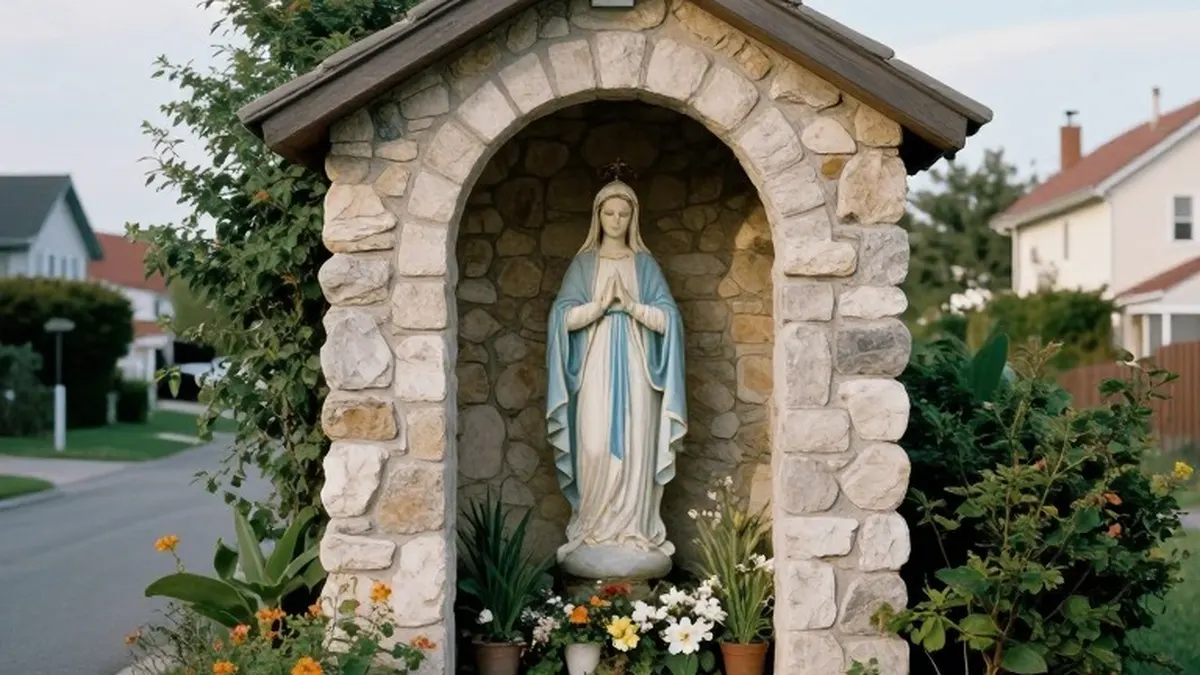
A small prayer shrine planned by a Catholic religious community in Kentucky has become the center of a major legal dispute, drawing the attention of a broad coalition of state attorneys general. The case, which began as a local zoning conflict, is now poised to become a landmark test of religious liberty before the U.S. Supreme Court. The dispute centers on the Missionaries of St. John the Baptist and their efforts to build a modest grotto on their own property in Park Hills.
Kentucky Attorney General Russell Coleman is leading a group of 18 states that are urging the Supreme Court to reverse a lower court ruling. That ruling blocked the construction of the roughly 600-square-foot structure, even though local zoning officials had initially approved the project. The coalition argues that the decision undermines the fundamental freedom of religious exercise for the community.
The legal battle pits the Missionaries against neighboring property owners Joel and Elizabeth Frederic. The Frederics challenged the city's approval of the outdoor shrine and successfully argued in Kentucky's appellate courts that the zoning board had exceeded its authority. Despite the initial local approval, the neighbors prevailed in the state's higher courts, leading to the current federal challenge.
In a statement, Coleman expressed pride in standing alongside colleagues from across the country to defend the religious liberty of the Kentuckians involved. He characterized the situation as a case where a fundamental American freedom was being dismissed by a heckler's veto. Coleman expressed confidence that the Supreme Court justices would agree with the coalition's position.
The controversy traces back to 2021 when the Missionaries sought permission to construct a 16-by-39-foot grotto. The design was intended to honor the Virgin Mary's apparition to Saint Bernadette in Lourdes, France. The proposed site would have included a shrine, a plaza, a walking path, and a retaining wall, creating a quiet space for meditation and prayer on property where a church building has stood for nearly a century.
The Park Hills Board of Adjustment approved the project in April 2021. However, the Frederics filed a lawsuit, arguing that the construction violated local zoning requirements established in 1974. A trial court initially upheld the city's decision, but the Kentucky Court of Appeals reversed that ruling. Subsequently, the Kentucky Supreme Court affirmed the rejection of the Missionaries' federal religious land-use claim in December 2025.
The Supreme Court agreed in October to hear the case, with oral arguments scheduled for January 20, 2027. This is the first time the Court is considering the land-use protections offered by the Religious Land Use and Institutionalized Persons Act, or RLUIPA. The law was enacted by Congress in 2000 to protect religious institutions from specific burdens imposed through zoning and land-use regulations.
Ryan Gardner, senior counsel at the First Liberty Institute which represents the Missionaries, noted that the stakes extend beyond this specific shrine. He compared the grotto's footprint to a swimming pool to highlight its modest size. Gardner stated that the case has the potential to impact every zoning law in the country, placing RLUIPA at the intersection of religious liberty and property rights.
The Missionaries argue that preventing the construction of a religious structure on their property imposes a substantial burden on their religious exercise. In contrast, the Frederics dispute this interpretation in their Supreme Court opposition brief. They argue that the religious organization failed to demonstrate why alternative locations for the grotto were unavailable and challenged claims that lower courts are fundamentally divided over the legal standard for determining substantial burdens.
The Supreme Court has agreed to focus specifically on the substantial-burden question rather than every issue raised in the underlying zoning dispute. The multistate brief was prepared by Kentucky Solicitor General Matt Kuhn, Principal Deputy Solicitor General Jack Heyburn, and Deputy Solicitor General Jacob Abrahamson. What began as a local proposal for a quiet place to pray has evolved into a national debate over the limits of neighborly challenges to religious construction.
More News · National news · Report a business · Got a Story?