Federal Tree Money Could Help Buffalo Replant Neglected East Side Streets
A $1.5 billion federal urban forestry fund offers Buffalo a chance to reverse its shrinking tree canopy, though city officials, council members and residents differ on the scale of the problem and on who should maintain new trees.
By Malcolm Davis ·
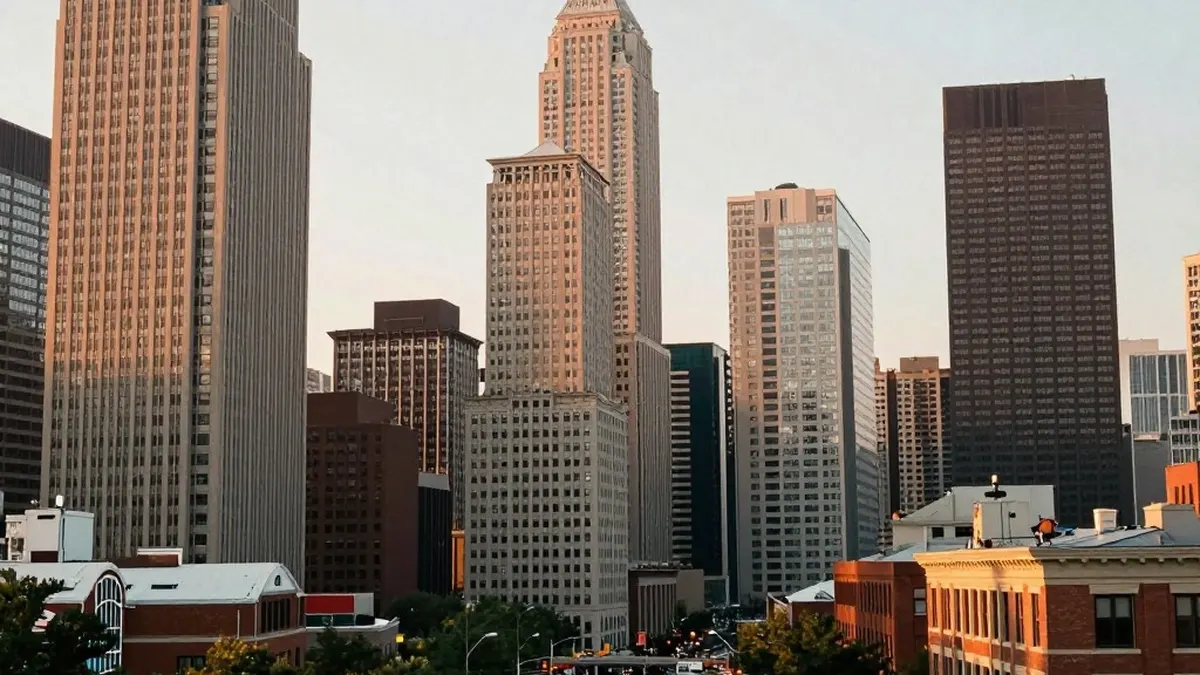
Buffalo is spending $568 million this budget year, most of it on police and firefighters. Only a small share goes to planting and caring for trees, which affect residents' health. The city's tree population is shrinking, with two trees removed for every one planted.
Relief may be coming from Washington. Under the Inflation Reduction Act, the federal government has set aside $1.5 billion for planting and maintaining trees in urban areas, to be distributed through competitive grants. Beattra Wilson of the U.S. Department of Agriculture Forest Service called it an opportunity "with resources that we can actually disburse to meet the need." Wilson, assistant director for Urban & Community Forestry, said local governments and nonprofits can apply. The legislation gives priority to projects that benefit underserved populations and areas, but it is not yet clear when the money will begin flowing or what criteria will determine winners.
Buffalo officials say they will pursue the funding. Mayor Byron Brown said it would help the city "accelerate the planting that takes place citywide," though he maintained that Buffalo does not have a tree-equity problem. "We think, as it relates to trees, Buffalo is an equitable city," he said. That position sits uneasily with a July Investigative Post report, which found the city cutting down as many as four trees for every one planted in some Black neighborhoods, and documented East Side residential streets with no trees at all. Andrew Rabb, deputy commissioner for Parks and Recreation, said the city is reviewing the opportunity while awaiting state guidance on how and when to apply.
The numbers illustrate the gap. From 2016 to 2020, city practices produced a net loss of 2,455 trees. This budget year, the city plans to remove 1,000 trees and plant 300. The Bureau of Forestry's budget, covering labor, equipment and trees, is $953,702. Henry Taylor, director of the Center for Urban Studies at the University at Buffalo, called the trend "one of the most despicable things that I can imagine," citing the link between tree canopy and health. He said areas with weak coverage see much higher rates of asthma and chronic respiratory disease among African Americans.
Two Council members representing districts losing trees want the city to do more. Mitch Nowakowski of Fillmore said, "Nothing says we care more about trees than dollars and cents," and added that he has his "homework cut out" to develop a plan for the federal funds. Rasheed Wyatt of the University District said the city should "absolutely" pay for maintenance of trees near curbs: "If it's in the city's right-of-way, it should be on them." U.S. Rep. Brian Higgins, whose district includes the East Side, noted that nonprofits are eligible and pointed to the history of the Black East Side, which lost a parkway, as a reason to pursue the money aggressively.
Community groups are not waiting. Eugene V. Debs Hall, near the Central Terminal, asked the city on Aug. 8 to plant 19 street trees along Peckham Street between Fillmore Avenue and Memorial Drive, which the social club would maintain. The group noted that Rother and Houghton avenues have five trees, while Mariner Street in Allentown, also in the Fillmore District, has more than 90. In early November, The Tool Library plans to plant 69 trees around its site at Main Street and Northrup Place. Founder Darren Cotton said the federal money "would go a long way," because there is too little funding for nonprofits and local governments to plant at scale. Re-Tree WNY, a past city partner, could not be reached about its plans.
Not all residents favor more planting. At a September community meeting where Wyatt raised the idea, several people worried about roots damaging sewer lines and about maintenance burdens. "I'm not against trees," said Beunice Turner, who warned of roots in sewers. Lois Young, vice president of the University District Block Club Coalition, said residents of neighborhoods like theirs may not realize what they are missing, including benefits to health and outlook on life.
Originally published by News Media House · Source: Investigative Post