Trump claims he persuaded Nvidia board to bring back Jensen Huang
The US president stated that he provided national security assurances to the board, helping secure the reinstatement of the chipmaker's chief executive.
By Pavel Sullivan ·

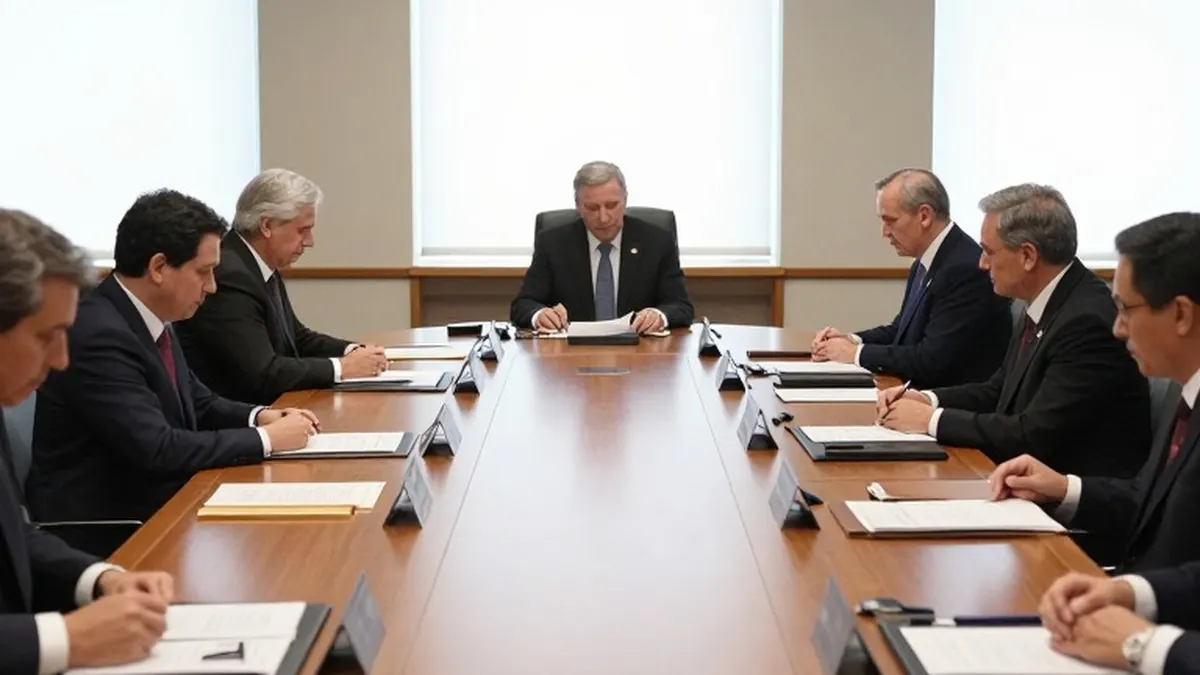
President Donald Trump stated on November 23 that he directly engaged with the board of directors at Nvidia to secure the reinstatement of Jensen Huang as chief executive officer. In a short interview with CNBC, the president explained that he offered specific assurances to the board members. He claimed these assurances addressed the fact that Huang's recent extramarital affair did not constitute a national security risk for the United States.
Huang had stepped down from his role on November 12, a move triggered by reports detailing a series of extramarital affairs. One of these relationships was alleged to involve a woman with connections to Chinese intelligence. Despite the ongoing controversy, the US president has maintained strong support for the executive, even as several lawmakers have voiced opposition to his return to the helm of the company.
During the interview, Trump described the interaction with the board members. He said, I spoke to them, let me put it that way, and I convinced them. The president also commended the Nvidia board for handling the situation responsibly. He noted that the board requested clarity on the potential national security threat. The administration provided these assurances based on their current knowledge, with Trump adding that the US government knows a lot about the situation.
The president emphasized the strategic importance of Huang to the US tech sector. He argued that losing the executive would be a greater threat to the country than keeping him in the role. Trump revealed that he had a phone conversation with Huang on the night before the company announced the reinstatement on Monday. He also acknowledged that the recent drop in Nvidia stock prices following the initial resignation likely influenced his decision to intervene personally, though he cited long-term benefits as the primary factor.
Before the official announcement, Trump had frequently downplayed the concerns surrounding Huang. He suggested that the executive had learned a significant lesson from the incident. The president's vocal backing has stood in contrast to the concerns raised by US legislators. Some members of Congress, including Republicans, have questioned Nvidia's compliance with export controls and the implications of the alleged ties to Chinese intelligence.
Financial disclosures indicate that the president has a personal financial interest in the company. Recent records show he purchased $265,000 worth of Nvidia stock and sold approximately $15,000 worth of shares in September. This personal stake adds another layer of complexity to the administration's public support for the chipmaker's leadership.
Reaction to the reinstatement has been mixed among political leaders. Republican Congressman Don Bacon of Nebraska criticized the decision on Monday. He argued that Nvidia should have moved forward without Huang and that the administration's desire to save him was inexplicable. Bacon stressed the need for transparency regarding who is responsible for managing the company's technology.
Democrats, who are set to control both chambers of Congress starting in January, have already signaled their intent to investigate the matter. Senator Elizabeth Warren, who is expected to chair the Senate Banking Committee, described the reinstatement as reckless. She stated that Huang's return increases the urgency of passing bipartisan export control bills. Warren warned that it is crucial to ensure Nvidia does not lobby against this legislation in a way that could jeopardize national security.