Carney Pivots to China as U.S. Trade Talks Stall
Ottawa secures new deals with Beijing and ASEAN while Washington and Ottawa remain at odds over auto tariffs.
By Luca Shevchenko ·
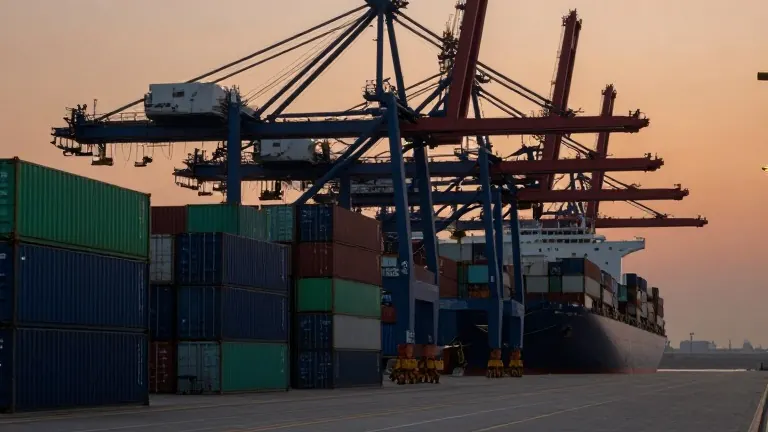
Canadian Prime Minister Mark Carney is accelerating trade deals with Asia to reduce economic reliance on Washington. This shift comes as U.S. and Canadian negotiators remain deadlocked over automotive rules and retaliatory tariffs.
The trade war has persisted for three months since talks collapsed in August. Both sides now enforce heavy retaliatory tariffs. In response, Carney spent eight days traveling from Ireland to China. He stopped in the Philippines, Cambodia, and Shenzhen to finalize new agreements.
During a remote interview from Shenzhen, Carney stated that Canada’s position is strong because other nations want to trade with it. He said, “Our cards are that everyone else in the world wants to deal with us.” He added that if the U.S. does not want a deal, Canada is busy with other partners.
Ahead of the Asia-Pacific Economic Cooperation summit, Carney and Chinese President Xi Jinping announced a new trade pact. Canada will extend tariff exemptions for specific Chinese steel and aluminum products by two years. In exchange, China will lower tariffs on Canadian food and agricultural exports. Carney called the process professional and linear.
Carney also finalized negotiations for two free trade agreements in Manila. One deal covers the 11-country ASEAN bloc. The other is with the Philippines. Carney’s office projects the Philippine deal could triple exports by 2035. These moves aim to integrate Canada more deeply into Asian supply chains.
Experts note that China’s status as the world’s second-largest economy gives Ottawa a new option. Jennifer Hillman, co-director at Georgetown University’s Institute of International Economic Law, said Canada can be less willing to accept U.S. demands because it has other markets. Lori Turnbull, a professor at Dalhousie University, agreed that China represents a large potential trading partner.
Domestic reactions remain mixed. Ontario Premier Doug Ford warned against importing more state-subsidized Chinese electric vehicles. Conservative lawmaker Michael Chong called the partnership a risky gambit due to national security concerns. The government identified China as a source of foreign interference in 2025.
Carney addressed these risks by noting that Canada exports commodities like canola, pork, halibut, and oil to China, not advanced semiconductors. He suggested Canadian auto workers could work with European and Asian manufacturers if U.S. talks fail. He described this as action and reaction, not leverage. He emphasized that Canada will move forward regardless of the outcome.
More Business · Bad Service · Report a business · Got a Story?